
Why do I need digestive enzyme supplements?
Raw food contains the enzymes needed to digest it. However, most of us don’t live on a raw food diet. When we cook our food, the enzymes in the food are destroyed and our body has to make them in order to digest our food. This puts stress on our system especially since people eat more processed foods and meals higher in calories and fat. Digestive enzyme supplements help you digest your meals more efficiently and deliver the nutrients from your food to your body. Enzyme supplements are clinically proven to reduce the effects of bloating, gas, occasional heartburn and occasional acid reflux. [back to top]
Are digestive enzyme supplements destroyed in the stomach?
Enzyme Essentials' plant-based digestive enzymes have either a wide range of pH and/or are stable and active in the acid range. Our enzymes have been carefully selected to withstand the conditions of the GI tract. The theory that enzymes are destroyed in the stomach is outdated and has been disproven by various studies.
I don’t have gas or digestive problems. Why should I take digestive enzyme supplements?
Digestive enzymes can help with digestive problems, but since they help strengthen your body's immune system, then their uses are much broader than just digestion related discomforts. There is a connection between the strength of our immune system and our enzyme level. The more enzymes we have, the stronger our immune system will be. The field of digestive enzyme research is growing and many studies using digestive enzymes can be found in well known journals such as the International Journal of Oncology, Lancet, Digestive Diseases and Sciences, Digestion, International Journal of Immunotherapy, American Journal of Digestive Disease and Nutrition, and many more. [back to top]
Why are enzymes important?
Enzymes are one of the most essential elements in our body. They are responsible for constructing, synthesizing, carrying, dispensing, delivering, and eliminating the many ingredients and chemicals our body uses in its daily business of living. Digestive enzymes break down the food we eat, releasing nutrients for energy production and cell growth and repair. [back to top]
Why does each enzyme in a digestive supplement have a different unit of activity?
Enzyme activity is required for its digestive function. This activity is measured by chemical tests known as assays. Every enzyme has its own assay method which is reported in activity units. The declared activity unit also identifies how the activity was measured. HUT is a compendial method, published in the Food Chemical Codex (FCC), for proteases. DU is the FCC method for amylase. Each test has its own unit which are typically used to label enzyme dietary supplements.
Learn more about Comparing Digestive Enzyme products [back to top]
Why do different companies use different activity units for various enzymes, for instance why is Protease labeled as HUT, SAP, AP, PU, PC, FU, DPP, etc.?
Unfortunately, the FDA does not recognize the importance of activity units in labeling enzyme supplements. FDA regulations require only the declaration of metric units in milligrams of either individual enzymes or proprietary blends. For this reason, there is no mandated standard for labeling enzyme activity units. Dietary supplement companies are free to choose how they wish to label enzyme activity.
Many companies choose to use the FCC or the US Pharmacopeia (USP) when appropriate. HUT, SAP, AP, PU, and PC are all FCC assays for proteases but choosing which assay(s) is best for your product label depends upon your application. Meanwhile, the FCC and USP do not have assays for every enzyme that may be used in an enzyme supplement. Additionally, some companies may wish to protect their product from being copied and so use units that are based upon proprietary assay methods. [back to top]
What is happening to our enzymes?
The reason we are running out of enzymes is a LIFESTYLE PROBLEM. Research has shown that older people and people with chronic disease have fewer enzymes in their saliva, urine and tissues. Our poor dietary habits require excessive amounts of enzymes to digest our foods. Stress kills and damages cells, resulting in our enzyme-making machinery having to work overtime to help rebuild and replace them. Environmental pollution causes cellular damage requiring ongoing assistance from enzymes just to maintain a healthy immune system. And time is a big factor. Time and the process of living uses up enzymes that must be replaced if we expect to retain the healthy active lifestyle we have grown accustomed to. ENZYMES are ESSENTIAL, but your enzyme levels are dropping. [back to top]
Supplemental digestive enzymes can help can help improve your health and bring your systems into balance.
How can I maintain my enzyme levels?
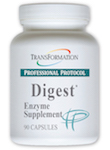
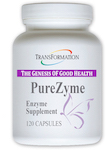
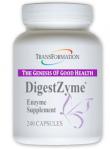
You can begin a digestive enzyme supplement regimen! By taking supplemental enzymes such as TPP Digest 90 or DigestZyme at meals to help your body with digestion, you allow your body to devote more energy to repairing and maintaining your organs and tissues. Taking additional protease enzymes (as found in PureZyme) between meals on an empty stomach can help strengthen the immune system by breaking down free-radicals and blood toxins. [back to top]
Who is Enzyme Essentials?
Enzyme Essentials has been selling Transformation's enzyme supplements online and direct to consumers since 1998. We partnered with Transformation Enzyme Company in Houston to bring you the best enzyme formulations on the market backed by clinical study. Dr. DicQie Fuller, a leading enzyme expert and the founder of Transformation, has been developing enzyme formulas for almost 20 years and the company’s focus is enzymes and overall digestive health. They did not jump on the “enzyme band wagon” that has emerged in the last few years, but have been a leader in the digestive enzyme field for almost two decades. When you purchase our products, you know you are getting some of the best and most clinically proven direct-to-consumer plant-enzyme formulas on the market.
Read more about the Enzyme Essentials story. [back to top]
Why do I need supplemental digestive enzymes if my body already makes them?
The body can make digestive enzymes; however, the more digestive enzymes it is required to produce for digestion, the fewer enzymes it can create to maintain optimal health. It is very important that we preserve the body’s ability to make enzymes. If supplemental plant digestive enzymes are taken with a meal, these digestive enzymes begin their work immediately. The supplemental digestive enzymes in DigestZyme and Digest 90 will break down the food, thus saving the body from having to release as many of its own enzymes. This allows the body to devote its attention to supplying more metabolic enzymes so the organs and tissues can carry on their daily work. [back to top]
Enzyme Essentials has a lot of products. Which ones should I start with?
Every person has different needs for their digestive system. But, if you are just starting a digestive enzyme regimen, we suggest starting with our Basic Maintenance products which include a digestive enzyme supplement such as TPP Digest 90 or DigestZyme taken with meals and our TPP Probiotic or Plantadophilus probiotic taken at night before bed. This will get your body on track to optimum digestive health.
The digestive enzymes taken with meals along with a daily probiotic help with complete digestion along with:
We also have digestive enzyme products to help with other health concerns:
Click for our complete product list with pricing.
What should I expect to feel when I begin taking digestive enzymes?
Most people feel better in terms of energy, digestion, and elimination. Occasionally persons may experience a period of increased detoxification when beginning enzyme therapy. This is actually a good sign as the body is now able to eliminate excess toxins, although you may feel tired or achy for a few days. Increasing enzyme dosages and water intake is often the best recommendation to help you through this natural process. [back to top]
Can enzymes be harmful if you take too many?
When speaking about digestive enzyme formulas, no. As active protein molecules, the enzymes do not accumulate in the body. They impart enzymatic activity that lasts anywhere from one to four hours and then they are eliminated from the body or the proteins are broken down and the amino acids are used for other purposes. As with any herbal or nutritional supplement, evaluation of amounts and over consumption should be determined on an individual basis. [back to top]
Can children take digestive enzymes?
Yes, absolutely. You can give digestive enzymes to infants, toddlers, and young children. For toddlers and young children, see our complete line of Kidz Digest products.[back to top]
Can enzymes be taken with other prescription medications?
Digestive enzymes function by breaking down specific chemical bonds in foods. In most cases digestive enzymes can therefore safely be taken with medications. However, it is of course always recommended to let your health care provider know what you are taking.
One area of caution is with prescription blood thinning agents. If you are on this type of medication, you should consult with your physician before beginning an enzyme regimen. [back to top]
Can you take protease enzymes when taking prescription “protease inhibitors”?
More often than not, the term “protease” that describes proteolytic enzymes is used in very general terms. There are many metabolic proteases in our body, each with many different functions. The medications that are designed as protease inhibitors are targeting a very specific viral protease. The supplemental digestive proteases are very different and will not interfere with the medication.[back to top]
Will taking supplemental digestive enzymes inhibit the body’s ability to make its own enzymes?
No. It is the presence of hormones, not enzymes, that signals for secretion of more or less enzymes. Whether from internal or external (supplemental) enzymes, complete hydrolysis of food macromolecules is the indicator for the hormones secretin and cholecystekinin to signal the pancreas to stop secreting pancreatic juices. Taking supplemental digestive enzymes supports and assists the digestive function; it does not inhibit it. [back to top]
Are your products “100% natural” and organic?
The preference of natural, synthetic, or organic ingredients and the definition of each can be very confusing and controversial. We believe the real question should be: “Are your ingredients safe, effective, and free from harmful chemicals?” Our goal, in conjunction with our manufacturers, is therefore to provide safe, effective, high quality nutritional supplements that are free of any pesticide or herbicide residuals.
Enzyme Essentials and Transformation impose very strict quality control standards on ingredient selection and our manufacturer has been certified as a GMP company. To each raw material received, a unique set of methodologies and specifications is developed in accordance with all available compendial literature. This set of methods and specifications is then applied to each subsequent batch received. All reasonable efforts are made to completely and effectively characterize each raw material intended for production. [back to top]
Are your digestive enzymes gluten-free? Dairy-free? Vegetarian?
Most of our digestive enzyme formulas are vegetarian, dairy-free, and gluten-free and they come in vegetarian (cellulose) capsules. In fact, the digestive formulas are very effective in breaking down gluten, lactose and casein the food molecules that often cause problems for those with gluten or dairy intolerance. See individual products specifications for more information. [back to top]
Are your products FDA approved?
We use only the highest quality pharmaceutical grade digestive enzymes. Our products are considered as Dietary Supplements and therefore do not fall under FDA guidelines. As a leader in the health care supplement industry, Enzyme Essentials, Transformation and our manufacturer are committed to enforcing the highest quality control standards. [back to top]
When looking for an enzyme product, what label information is important?
The enzyme activity rather than its weight is the information that tells you the real value of the enzyme product. The enzymes should also be acid stable and function in a broad pH range. Lastly, take a close look at the “other ingredients” list for excipients, fillers, or additives that may not provide nutritional or digestive benefits.
Enzyme Essentials and Transformation use pharmaceutical grade enzymes that are GI stable and function in a broad pH range. These products are formulated to provide optimal enzyme activity for healthy digestion. The ingredients have been rigorously tested to ensure safety and efficacy. We do not use any fillers, additives, or other excipients in our products. [back to top]
When should I take the different kinds of enzymes? How strict is the timing?
We suggest a digestive formula such as TPP Digest 90 or DigestZyme at the beginning of the meal because that is when the digestive process begins. You will want the enzymes available as soon as possible to assist the digestive process. However, if you forget, then it is perfectly fine to take them in the middle, at the end, or whenever you remember, as digestion lasts several hours.
We suggest taking protease such as PureZyme between meals (or on an empty stomach) because the goal here is to get the protease into the blood stream. Once in the blood stream, its fibrinolytic and proteolytic action benefits circulation, the immune system, inflammation, and detoxification. There is usually enough protease in the digestive formulas to meet the need for protein digestion during meals. If you are sensitive to taking supplements on an empty stomach, we might suggest taking the protease at the end of a meal. However, we often find that after the patient has been on the enzymes for a period of time, this “sensitivity” is resolved.
We suggest taking probiotics such as TPP Probiotic or Plantadophilus at bedtime because the gut is at rest during the night. The probiotic organisms have the best opportunity to adhere to the intestinal wall for colonization during this time of least activity in the GI tract. We may also suggest additional probiotics in the morning to assist with bowel regulation, and the probiotics may also be taken with meals to reduce digestive discomfort from gas and bloating.
As you can see, the recommended timing is ideal, but not strict. For the very busy patient who just can’t seem to take them as recommended, we say: “Taking them when you remember is better than not taking them at all!” [back to top]

 |