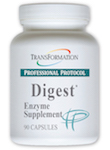

Our approach to supporting good health is simple – Give the body the nutrients it needs, clear away the waste and allow your body to manage its resources. Enhanced digestion, circulation, detoxification and a healthy gut environment collectively provide more efficient nourishment of the cells. This allows the body to work smarter, not harder, resulting in more energy and less stress on our systems and organs for overall wellness.
Digestive enzymes digest our foods and then send the nourishing ingredients to the bloodstream to feed the organs, glands, cells and tissues as well as the brain. Many scientists believe that most "lifestyle" and degenerative diseases, and even aging itself, are simply the lack of a continued and adequate supply of the necessary nutrients required to keep all of the body's systems working properly.
You may be eating healthy, but if your digestive enzymes aren't getting those nutrients to your bloodstream, organs and cells, then you aren't receiving all the benefits of that healthy diet. And those nutrients are what keep all of your systems, particularly your immune system, strong and healthy.
Most people that take digestive enzyme products are usually looking for help with occasional digestive issues – gas, bloating, GERD, reflux, heartburn, irregularity, etc. Products like Digest 90, DigestZyme and LypoZyme contain a blend of digestive enzymes that support the proper breakdown of foods and help release the nutrients from our food for energy production, cell growth and repair. When foods are not properly digested by your body’s own enzymes and enter the small intestine, this may irritate our digestive tract and allow undigested food or waste to enter the bloodstream. Now our bloodstream has to work to clean up these undigested particles! Ugh. When you take a blend of digestive enzymes (protease, lipase, amylase, lactase, cellulose, etc.) in the form of supplements with a meal, these digestive enzymes work to help support complete digestion and help prevent undigested foods and waste from ending up where they shouldn’t.
A few common factors that affect digestion on a daily basis are:
Every person has different needs for their digestive system. But, if you are just starting a digestive enzyme regimen, we suggest starting with our Basic Maintenance products which include a digestive enzyme supplement such as TPP Digest 90 or DigestZyme taken with meals and one of our probiotics taken at night before bed. This will get your body on track to optimum digestive health.
The digestive enzymes taken with meals along with a daily probiotic help with complete digestion along with:
The body can make digestive enzymes; however, the more digestive enzymes required for digestion, the fewer enzymes it can create to maintain optimal health. It is very important that we preserve the body’s ability to make enzymes.
If digestive enzymes supplements are taken with a meal, these digestive enzymes begin their work immediately. The supplemental digestive enzymes will break down the food, thus saving the body from having to release as many of its own enzymes. This allows the body to devote its attention to supplying more metabolic enzymes so the organs and tissues can carry on their daily work.
Enzyme Essentials' plant-based digestive enzymes have a wide range of pH and are stable and active in the acid range and have been carefully selected to withstand the conditions of the GI tract.
The theory that enzymes are destroyed in the stomach is outdated and has been disproved by various studies.
Sure, digestive enzymes may help with digestive problems, but since they help strengthen your body's immune system, then their uses are much broader than just digestion-related discomforts.
Click for our complete product list with pricing.


 |